

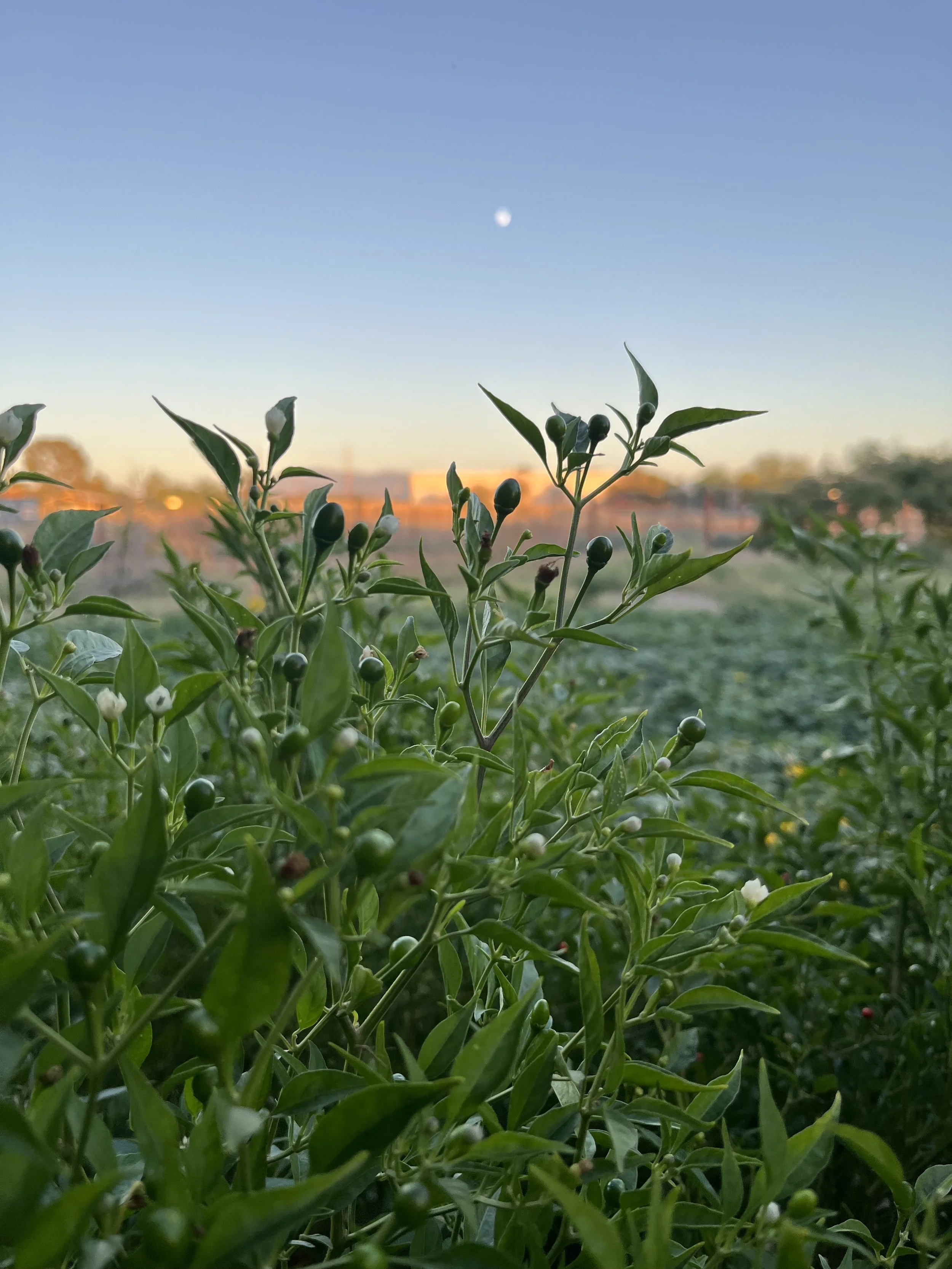
Chiltepin — the mother of all chiles — growing at Flowers & Bullets farm in Tucson.
When Martin Valdez crushes dried chiltepin peppers, he's reminded of his grandmother.
“Even hearing the word ‘chiltepin’ reminds me of back home,” Valdez said. “My grandma used to pickle them, like pickled jalapenos.”
For Valdez, field manager at Flowers & Bullets farm in Tucson, the tiny, fiery pepper represents more than a familiar flavor. It's a connection to family, tradition and the food cultures of northern Mexico. And as the farm explores ways to grow more food using practices suited to the Sonoran Desert, chiltepin is proving to be a crop worth cultivating.
Native to the Americas, chiltepin is a wild ancestor of many domesticated chiles, including jalapeños and cayenne peppers. The pea-sized fruit grows on a perennial shrub adapted to the region's climate, offering opportunities for farmers interested in producing food while making more efficient use of limited water resources.
“It’s just cool to see them grow,” Valdez said. “And them being one of the oldest plants, too. It’s the mother of all chiles.”
A Desert-Adapted Crop With Potential
At Flowers & Bullets, growing chiltepin is part of a broader effort to explore regenerative agriculture and strengthen local food production.
The farm's work with chiltepin was part of a federally funded climate-smart agriculture initiative developed through a partnership between Local First Arizona and the University of Arizona.
The initiative, supported by a USDA Advancing Markets for Producers grant, helped participating producers explore agricultural practices such as cover cropping, drip irrigation, reduced tillage and agroforestry. The University of Arizona distributed funding to participating producers, while the broader project also sought to expand markets and consumer awareness for desert-adapted crops, including chiltepin, prickly pear, agave and legumes.
For Flowers & Bullets, cultivating chiltepin aligned with its interest in growing food suited to southern Arizona's climate.
Chiltepin also offers potential advantages for a farm operating without refrigeration space. The peppers can be dried for storage and later used in a variety of dishes, offering another way to bring locally grown food to market.
Unlike many cultivated peppers, chiltepin grows on a semi-woody perennial shrub that can reach five feet tall. Its small, round peppers begin green and ripen to a vibrant red.
A young plant may produce around 100 peppers during its first productive year. As the shrub matures, its harvests can grow to hundreds or even a thousand peppers over the course of a year, depending on growing conditions.
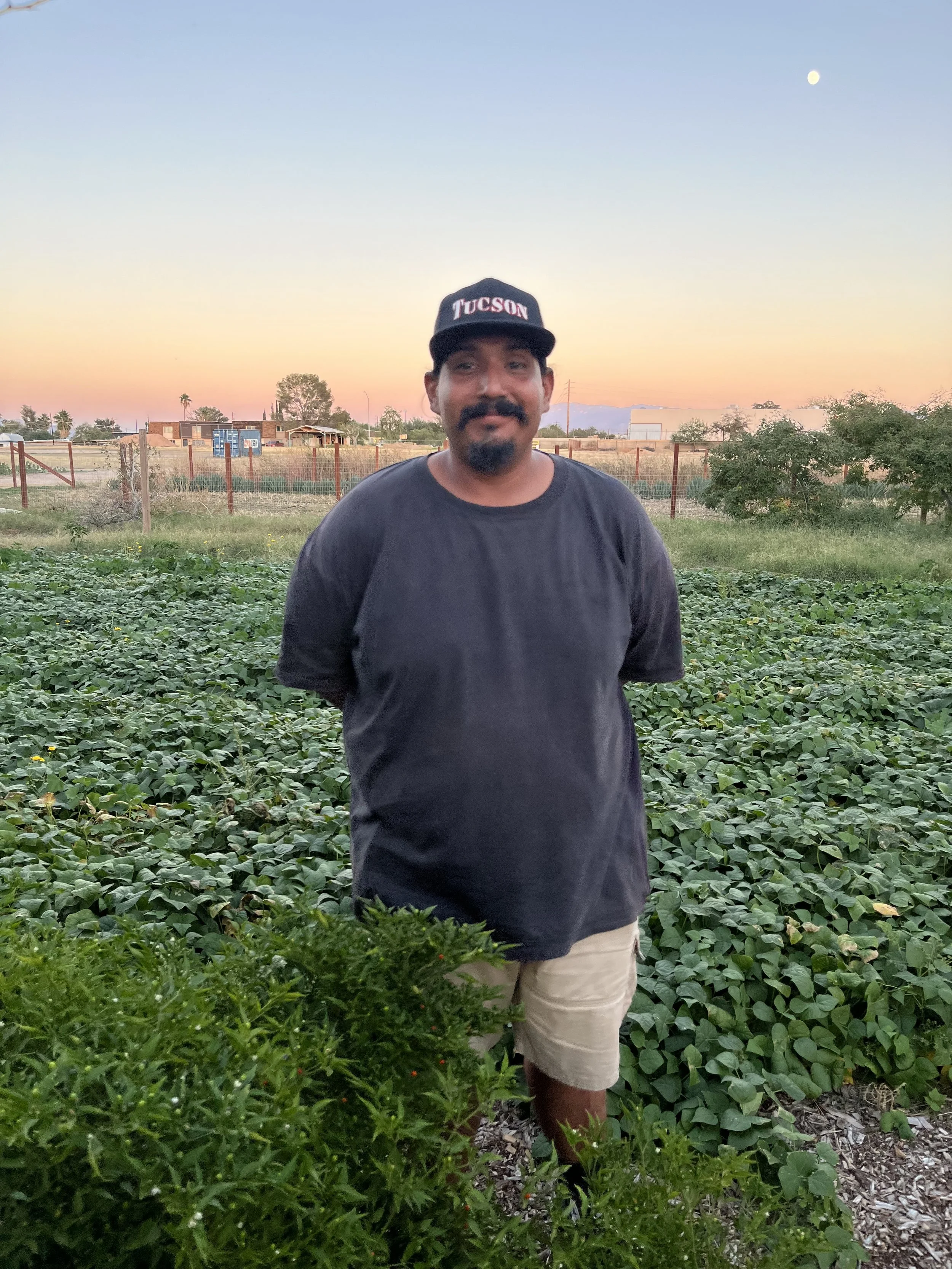
Martin Valdez, field manager at Flowers & Bullets in Tucson
Growing Chiltepin in the Sonoran Desert
Chiltepin's ability to grow as a perennial makes it particularly interesting to Valdez.
In southern Arizona, the shrubs can continue growing through much of the year, although freezing temperatures can damage their aboveground growth. Even when frost affects the upper branches, established plants may regrow from their roots when conditions improve.
Valdez manages the plants with an eye toward their natural growing cycles.
Valdez also encourages young plants to develop stronger growth by removing some of their blossoms. Rather than allowing the plants to direct energy toward producing peppers right away, he gives them more time to develop before fruiting. It's one way he manages their growth to suit the farm's conditions.
He also adjusts irrigation to resemble the Sonoran Desert's pattern of intermittent rainfall. Rather than watering continuously, he runs the drip irrigation system for approximately six hours, then allows several days to pass before watering again.
It's an approach he uses to manage the plants under the farm's growing conditions.
Flowers & Bullets typically harvests chiltepin in April or May, before birds begin eating the ripe peppers, and again in the fall. The shrubs generally produce little or no fruit during the coldest months, from December through February.
The plants' resilience, perennial growth and compatibility with water-conscious cultivation make them an intriguing option for farmers exploring crops suited to the desert.
Meet Flowers & Bullets
Based in Tucson, Flowers & Bullets is a community-focused farm working to connect people with fresh food, agriculture and the land.
Learn more about the farm and see its work in action in this video.
Small Pepper, Big Flavor
Chiltepin may be tiny, but its flavor is anything but subtle.
“You try it and it’s like ‘Whooooo!’ It’s there,” Valdez said. “It’s present and it drifts away with whatever you’re eating. The smoky flavor is phenomenal. You don’t want to stop eating it. It’s an addictive kind of spicy.”
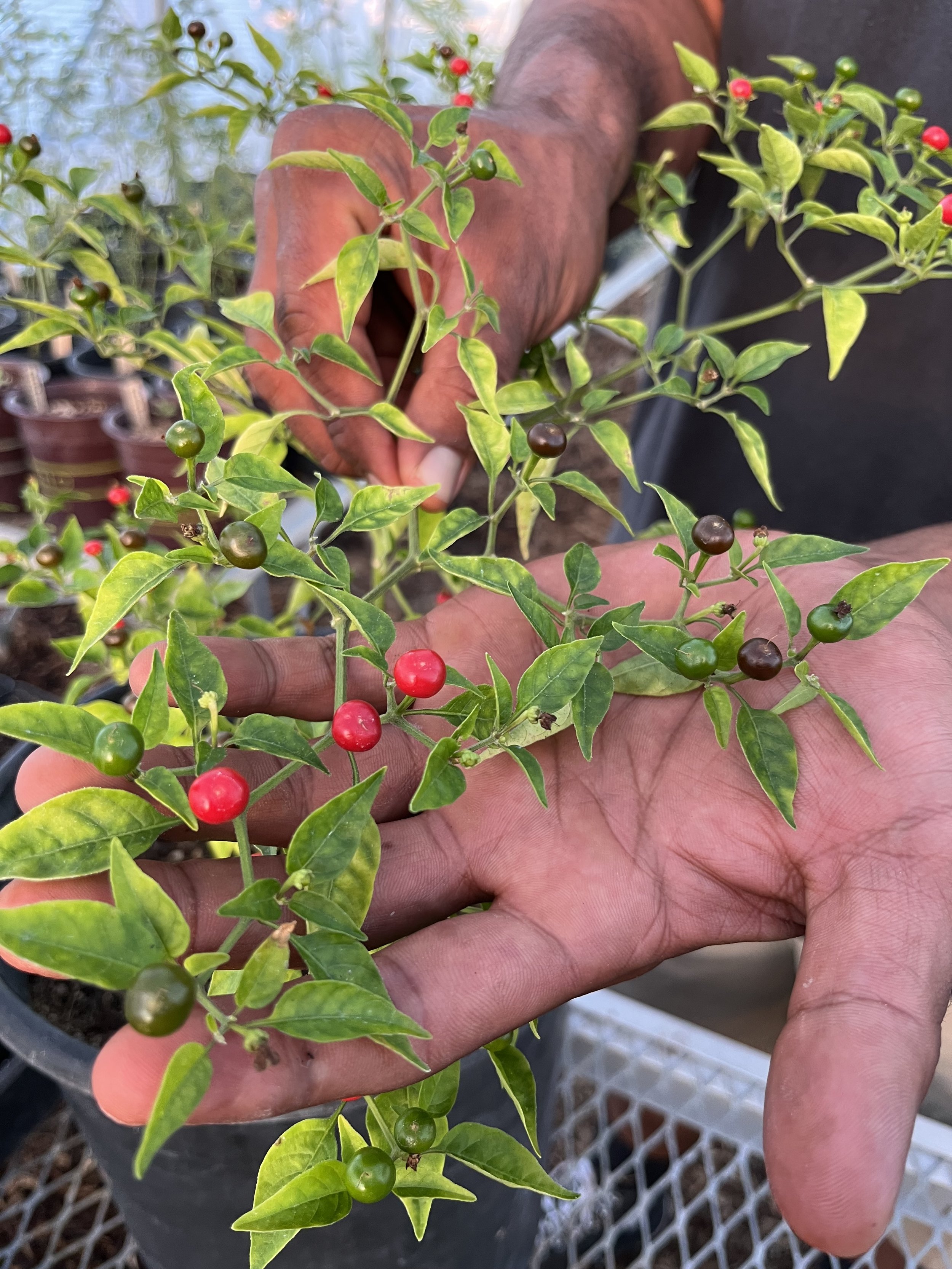
Chiltepin is especially prominent in the culinary traditions of Sonora and Sinaloa, Mexico, where families have gathered the wild peppers for generations. Dried chiltepin is often kept close at hand, ready to add flavor to salsa, menudo and other familiar dishes.
Unlike the lingering burn of some peppers, chiltepin is known for an intense burst of heat that fades relatively quickly. Its smoky flavor makes it a popular addition to salsas, soups and other dishes.
Some people prefer the sharp heat of green chiltepin eaten fresh from the plant. Others dry the ripe red peppers, crush them and sprinkle them over food.
Valdez keeps his favorite preparation simple: 10 chiltepin peppers, two tomatoes and garlic make a quick batch of salsa.
“It kicks you, but it makes its way out,” he said.
Chiltepin is especially prominent in the culinary traditions of Sonora and Sinaloa, Mexico, where families have gathered the wild peppers for generations. Dried chiltepin is often kept close at hand, ready to add flavor to salsa, menudo and other familiar dishes.
For Valdez, those traditions are inseparable from memories of his own family.
Keeping a Tradition Growing
Growing up, Valdez remembers family members gathering wild chiltepin in Mexico. It wasn't simply about collecting an ingredient. It was part of family life, a tradition passed from one generation to the next.
Now, cultivating chiltepin at Flowers & Bullets gives Valdez an opportunity to share that connection with people in Tucson.
By growing the peppers locally, bringing them to markets and sharing them with neighbors, the farm is helping make a culturally significant ingredient more accessible while exploring agricultural practices suited to the desert.
For families with roots in Mexico, the familiar flavor can evoke memories of places, people and traditions that aren't always easy to revisit.
“You can remind people a little bit of Mexico and you can let them have it here,” Valdez said. “It's a great opportunity to be able to grow these chiltepines and provide them back to the community that grew up eating them here or back home.”